This is the 40th anniversary re-issue of Ghostown, the 2nd album by Dublin’s original punk band, The Radiators (from Space). Ghostown is many things; a post-punk masterpiece, a document of Dublin as it was in 1979, the first modern Irish rock album. Not an easy album initially to get into but stick with it, it’s well worth the listening effort. The re-issue is 45 tracks on two disks with disk one the original album plus related b-sides from the albums supporting singles and disk two for the hardcore fans – various demos and outtakes. A true masterpiece.
Hovels of the Holy is the 2nd full length release by Ulster county NY’s Templars of Doom. Similar in style to the bands debut, which I believe, I described as old school punk with kilts and bagpipes (and if I didn’t, I should have). The album itself is a mix of originals, including the stand out Tattooed Covered Hag and H-Block Escape, traditional and rebel songs as well as inspired covers of the Ramones, Chinese Rock and Slade’s, Mamma Weer All Crazee Now. Very enjoyable. The album is available on CD and vinyl (and I really love the album sleeve as painted by band basses Michael X Rose)
Kilmaine Saints – Wearing of the Green Auld Corn Brigade – Irish soldier laddie The Brazen Heads – Wind That Shakes The Barley Black 47 – Vinegar Hill Barney Murray – Glory, Glory Oh The Battering Ram – Henry Joy The Town Pants – Kelly The Boy From Killanne The Battering Ram – General Munro Shane MacGowan and the Popes – Roddy McCorley The Porters – The Rising of the Moon Neck – Back Home In Derry
The Penal Laws:
No Pope Here
The Treat of Limerick – not worth the stone it was written on
So you thought the last 600 years of Irish history was crappy, well those were actually the good ‘oul days. With the Irish Catholic army in France and William light footed elsewhere the fully Protestant parliament in Dublin break every agreement in the treaty using the excuse that the Pope now was recognizing Jimmy Deuce as the rightfully King of Ireland and England, allowing them to consolidate their power and destroy any remaining Catholic power in the country. The laws they brought in were called The Penal Laws and were social engineering at its worst, designed to impoverish and disenfranchise the Catholic population. The modern equivalent would be the apartheid laws in South Africa – and like apartheid they were all about keeping the power and wealth within a select group rater then to force Catholics to convert (as much a apartheid was designed to change skin color) though the laws were structured that if a son of a wealthy landowner converted then he would inherit all the fathers property (sometimes this was encouraged within family’s when one converted and the rest prayed for his eternal soul) ,if there was no conversion then the land was subdivided between all sons. Education, voting and property rights were banned as was carrying of any weapons and the ownership of horses was restricted. Churches were closed and Popish priests would be exacted if caught in the country. Ironically, the Presbyterians in Ulster who supported Willie and held out against Jimbo in Derry were also subject to the Penal Laws – their faith was not recognized at all and while a Catholic priest would be boiled, burned and beheaded if caught in the country his sacraments were still recognized by the state as valid – marriages the Presbyterians minister performed were not though they didn’t have to fear the being anyone’s barbecue – thousands of these dissenters left for North America and within a couple of generations they had their revenge and made life very difficult for the British in the colonies before becoming the original Hillbillies and Red Necks of the American South. “I bet you can squeal like a pig. Yah Fenian bastard!”
Castletown House
A Mud Cabin
Through out the 1700’s thing in Ireland got worse and worse and the Catholic population ground into poverty or left the county for the armies of Europe or education in the Irish Colleges in Paris or Rome. Famine broke out twice in the 1700 yet the Landlord class built large palatial mansions and ruled over estates of tens of thousands of acres with thousand of tenant farmers living hand to mouth eating the only crop that could grow on their miserable few acres that would feed their brood of 25 red headed runts, the potato. If a tenant improved his land then the rent was raised, if another tenant offered more rent for another tenants land then that land went to the highest bidder and the original tenant was thrown off the land. Pretty suckie! If you every visit Ireland make sure you visit Castletown House outside Dublin (Celbridge) and take the tour. The house is the largest house in Ireland built by William Conelly, the speaker of the Dublin parliament who made a fortune through taking over the land of the disposed in the early 1700’s and as the tour guide in the plummy West-Brit accent tells you about the wonderful life of the inhabitants of the big house, stick yer paw up and ask about the Irish in their mud cabin out the back who were paying for the parasites life style – it’s great to watch ’em squirm.
The United Irishmen:
The Capture of Lord Edward
Wolfe Tone
I met with Napper Tandy and I shook him by the hand he said hold me up for chrissake for I can hardly stand
In the 1776 the world shifted on its axis and 13 British Colonies declared independence and Ireland and especially Ulster with its close ties to the Americas (family ties so close that family trees were often just trunks) got cowbell republican fever. Then in 1789 the other country that provided sanctuary to the Irish, France, fell to republicanism. Within 3 years of the fall of the Bastille in 1792 saw the formation of the Society of United Irishmen that combined liberal Protestants in Dublin and Belfast with the Catholic rump with the idea of revolution to bring in democracy to Ireland, leaders of the movement included Lord Edward Fitzgerald – the youngest son of the Duke of Leinster – who started his career as a Redcoat and was shot and left for dead at Yorktown being rescued from the battlefield by a slave, Wolfe Tone (not the group but the man, though they are old enough to have been around then) and Napper Tandy. From pamphlets they moved quickly to revolution and appeals to the new French dictator Napoleon to send troops to Invade Ireland. Ireland moved toward all out revolution. Wolfe Tone tries 3 times to bring the French to Ireland. In 1796, 43 French ships carrying 15,000 men got in sight of Bantry Bay but the “Protestant winds” stopped the landing, there was another attempt in 1797 but again the weather stopped the landing and a third attempt was undertake with 3,000 men but disaster struck and Tone and Tandy were captured at the Battle of Lough Swilly in October 1798 which ended the rebellion (and Tone’s life).
.
The 1798 Rising:
The Battle of New Ross
Vinegar Hill
Skipping back a few months to March 1798 and after a particularly riotous Paddy’s day martial law was imposed (well more due to informers actually) forcing the United Irishmen into action before the French could try to show up again – a small rebellion breaks out in Cahir, County Tipperary that is quickly crushed, then the United Irishmen planed to take Dublin but again the government had a hot line to the plans through Informers. Never the less rebellion breaks out in surrounding counties of Kildare (Barney Murray – Glory, Glory Oh), Carlow and Wicklow (Holt’s Way) and are all crushed quickly and brutally. The rebellion spreads to Ulster and Antrim (Roddy McCorley) and Down and after initial success the rebels are………you guessed it……..crushed. To the south in Wexford the biggest rebellion of all breaks out and under the leadership of the Catholic priest, Fr. John Murphy – who was initially a government loyalist but who turned after witnessing government brutality to his parishioners. The rebels quickly took over the county but defeats at the Battle of New Ross, Battle of Arklow, and the Battle of Bunclody halted the spread of the rebellion outside of the county. The government poured in 20,000 troops and the Irish and the Red Coats with support from German mercenaries met at Vinegar Hill. Despite the splendid leader ship of Fr. Murphy the rebels were poorly armed and trained and up against battle hardened regulars they are encircled and completely routed. Much butchery of the surrendering rebels and their civilian followers followed – Fr Murphy was stripped, flogged, hanged, decapitated, his corpse burnt in a barrel of tar and his head impaled on a spike (not quite water-boarding but almost as bad).
The Republic of Connaught:
The British Army
Meanwhile across the country in Mayo, a small advance party of French Solders under the command of General Jean Joseph Amable Humbert land and they are met by the local muckers and the local branch of the United Irishmen. They quickly defeat the yeomanry and march on the 6,000 red coats hanging out in Castlebar. Faced with 1,000 Frenchmen and 1,000 bogmen with pikes (big stick with points on one end) in front of them the Redcoats turn and run and the battle becomes know in local legend as the Castlebar Races – the Redcoats, not pursued a mile or two beyond Castlebar they did not stop running until reaching Tuam, with some units fleeing as far as Athlone in the panic. After Castlebar the French/Irish army tries to march across the country and meet up with rebels in the midlands with the plan of taking Dublin. They made it to the midlands but like all good Irish battle they out on the losing end at the Battle of Ballinamuck. The French troops who surrender got off easily and were exchanged for British prisoners held by the French – the Irish, well those who weren’t killed in battle were executed by Lord Cornwallis orders (he who lost America for the crown). The novel The Year of The French by Thomas Flanagan based on the French landing is highly recommended.
Robert Emmet:
The rebellion was essentially over by October 1798 though some rebels held out in the hill and the bogs and with a small rebellion breaking out (more a street fight) led by Robert Emmet 1803. Emmet was the brother of Thomas a leader of the United Irishmen who managed to escape to New York. Emmet nearly escaped but the old romantic went to see his mott and was caught. He was tried for treason in front of hanging judge, Lord Norbury with his defense lawyer bribed by the crown. After he is sentenced to death the judge makes the mistake of asking Emmet “What have you, therefore, now to say why judgment of death and execution shall not be awarded against you according to law?”.
Emmet didn’t hold back and delivered one of the greatest speeches of history – ask Old Abe Lincoln – but it didn’t do him much good for the mortal world and he was hung, drawn and quartered (hung till your nearly dead, dragged behind horses and then cut in 4 pieces after he head is lobbed off by an axe).
“What have I to say why sentence of death should not be pronounced on me, according to law?
I have nothing to say which can alter your predetermination, not that it would become me to say with any view to the mitigation of that Sentence which you are here to pronounce, and by which I must abide. But I have that to say which interests me more than life, and which you have laboured, as was necessarily your office in the present circumstances of this oppressed country to destroy. I have much to say why my reputation should be rescued from the load of false accusation and calumny which has been heaped upon it. I do not imagine that, seated where you are, your minds can be so free from impurity as to receive the least impression from what I am about to utter. I have no hope that I can anchor my character in the breast of a court constituted and trammelled as this is. I only wish, and it is the utmost I expect. that your lordships may suffer it to float down your memories untainted by the foul breath of prejudice, until it finds some more hospitable harbour to shelter it from the rude storm by which it is at present buffeted.
Were I only to suffer death, after being adjudged guilty by your tribunal, I should bow in silence, meet the fate that awaits me without a murmur; but the sentence of the law which delivers my body to the executioner, will, through the ministry of the law, labour in its own vindication to consign my character to obloquy, for there must be guilt somewhere—whether in the sentence of the court, or in the catastrophes posterity must determine. A man in my situation, my lords, has not only to encounter the difficulties of fortune, and the force of power over minds which it has corrupted or subjugated, but the difficulties of established prejudice. The man dies, but his memory lives. That mine may not perish, that it may live in the respect of my countrymen, I seize upon this opportunity to vindicate myself from some of the charges alleged against me. When my spirit shall be wafted to a more friendly port—when my shade shall have joined the bands of those martyred heroes, who have shed their blood on the scaffold and in the field in defence of their country and of virtue, this is my hope—I wish that my memory and name may animate those who survive me, while I look down with complacency on the destruction of that perfidious government which upholds its domination by blasphemy of the Most High—which displays its power over man is over the beasts of the forest—which set man upon his brother, and lifts his hand, in the name of God, against the throat of his fellow who believes or doubts a little more or a little less than the government standard—a government which is steeled to barbarity by the cries of the orphans and the tears of the widows which it has made.
Lord Norbury— “The weak and wicked enthusiasts who feel as you feel are unequal to the accomplishment of their wild designs”.
I appeal to the immaculate God—I swear by the Throne of Heaven, before which I must shortly appear—by the blood of the murdered patriots who have gone before me—that my conduct has been, through all this peril, and through all my purposes, governed only by the convictions which I have uttered, and by no other view than that of the emancipation of my country from the superinhuman oppression under which she has so long and too patiently travailed; and I confidently and assuredly hope that, wild and chimerical as it may appear, there is still union and strength in Ireland to accomplish this noblest enterprise. Of this I speak with the confidence of intimate knowledge, and with the consolation that appertains to that confidence, think not, my lords, that I say this for the petty gratification of giving you a transitory uneasiness. A man who never yet raised his voice to assert a lie will not hazard his character with posterity by asserting a falsehood on a subject so important to his country, and on an occasion like this. Yes, my lords, a man who does not wish to have his epitaph written until his country is liberated will not leave a weapon in the power of envy, nor a pretence to impeach the probity which he means to preserve, even in the grave to which tyranny consigns him.
Lord Norbury — “You proceed to unwarrantable lengths, in order to exasperate or delude the unwary, and circulate opinions of the most dangerous tendency, for purposes of mischief”.
Again I say that what I have spoken was not intended for your lordship, whose situation I commiserate rather than envy—my expressions were for my countrymen. If there is a true Irishman present, let my last words cheer him in the hour of his affliction—
Lord Norbury— ”What you have hitherto said confirms and justifies the verdict of the jury”.
I have always understood it to be the duty of a judge, when a prisoner has been convicted, to pronounce the sentence of the law. I have also understood that judges sometimes think it their duty to hear with patience, and to speak with humanity; to exhort the victim of the laws, and to offer, with tender benignity, their opinions of the motives by which he was actuated in the crime of which he was adjudged guilty. That a judge has thought it his duty so to have done, I have no doubt; but where is that boasted freedom of your institutions—where is the vaunted impartiality, clemency, and mildness of your courts of justice, if an unfortunate prisoner, whom your policy, and not your justice, is about to deliver into the hands of the executioner, is not suffered to explain his motives sincerely and truly, and to vindicate the principles by which he was actuated?
My lords, it may be a part of the system of angry justice to bow a man’s mind by humiliation to the purposed ignominy of the scaffold; but worse to me than the purposed shame or the scaffold’s terrors would be the shame of such foul and unfounded imputations as have been laid against me in this court. You, my lord, are a judge; I am the supposed culprit. I am a man; you are a man also. By a revolution of power we might change places, though we could never change characters. If I stand at the bar of this court and dare not vindicate my character, what a farce is your justice? If I stand at this bar and dare not vindicate my character, how dare you calumniate it? Does the sentence of death, which your unhallowed policy inflicts upon my body, also condemn my tongue to silence and my reputation to reproach? Your executioner may abridge the period of my existence, but, while I exist, I shall not forbear to vindicate my character and motives from your aspersions; as a man to whom fame is dearer than life, I will make the last use of that life in doing justice to that reputation which is to live after me, and which is the only legacy I can leave to those I honour and love, and for whom I am proud to perish.
As men, my lord, we must appear on the great day at one common tribunal, and it will then remain for the Searcher of all hearts to show a collective universe who was engaged in the most virtuous actions or actuated by the purest motives—my country’s oppressor, or—
Lord Norbury— ”Stop, sir! Listen to the sentence of the law”.
My lord, shall a dying man be denied the legal privilege of exculpating himself in the eyes of the community from an undeserved reproach thrown upon him during his trial, by charging him with ambition, and attempting to cast away for a paltry consideration the liberties of his country? Why did your lordship insult me? Or rather, why insult justice in demanding of me why sentence of death should not be pronounced? I know, my lord, that form prescribes that you should ask the question. The form also presumes the right of answering. This, no doubt, may be dispensed with, and so might the whole ceremony of the trial, since sentence was already pronounced at the Castle before your jury were empanelled. Your lordships are but the priests of the oracle. I submit to the sacrifice; but I insist on the whole of the forms.
Lord Norbury— “You may proceed, sir”.
I am charged with being an emissary of France. An emissary of France! And for what end? It is alleged that I wish to sell the independence of my country; and for what end? Was this the object of my ambition? And is this the mode by which a tribunal of justice reconciles contradictions? No; I am no emissary.
My ambition was to hold a place among the deliverers of my country—not in power, not in profit, but in the glory of the achievement. Sell my country’s independence to France! And for what? A change of masters? No; but for my ambition. Oh, my country! Was it personal ambition that influenced me? Had it been the soul of my actions, could I not, by my education and fortune, by the rank and consideration of my family, have placed myself amongst the proudest of your oppressors? My country was my idol. To it I sacrificed every selfish, every endearing sentiment; and for it I now offer myself, O God! No, my lords; I acted a an Irishman, determined on delivering my country from the yoke of a foreign and unrelenting tyranny, and from the more galling yoke of a domestic faction, its joint partner and perpetrator in the patricide, whose reward is the ignominy of existing with an exterior of splendour and a consciousness of depravity. It was the wish of my heart to extricate my country from this doubly-riveted despotism—I wish to place her independence beyond the reach of any power on earth. I wish to exalt her to that proud station in the world which Providence had destined her to fill. Connection with France was, indeed, intended, but only so far as mutual interest would sanction or require.
Were the French to assume any authority inconsistent with the purest independence, it would be the signal for their destruction. We sought their aid— and we sought it as we had assurances we should obtain it—as auxiliaries in war, and allies in peace. Were the French to come as invaders or enemies, uninvited by the wishes of the people, I should oppose them to the utmost of my strength. Yes! My countrymen, I should advise you to meet them on the beach with a sword in one hand and a torch in the other. I would meet them with all the destructive fury of war, and I would animate my countrymen to immolate them in their boats before they had contaminated the soil of my country. If they succeeded in landing, and if forced to retire before superior discipline, I would dispute every inch of ground, raze every house, burn every blade of grass; the last spot on which the hope of freedom should desert me, there would I hold, and the last of liberty should be my grave.
What I could not do myself in my fall, I should leave as a last charge to my countrymen to accomplish; because I should feel conscious that life, any more than death, is dishonourable when a foreign nation holds my country in subjection. But it was not as an enemy that the succours of France were to land. I looked, indeed, for the assistance of France; I wished to prove to France and to the world that Irishmen deserved to be assisted—that they were indignant at slavery, and ready to assert the independence and liberty of their country; I wished to procure for my country the guarantee which Washington procured for America—to procure an aid which, by its example, would be as important as its valour; disciplined, gallant, pregnant with science and experience; that of allies who would perceive the good, and polish the rough points of our character. They would come to us as strangers, and leave us as friends, after sharing in our perils, and elevating our destiny. These were my objects; not to receive new taskmasters, but to expel old tyrants. And it was for these ends I sought aid from France; because France, even as an enemy, could not be more implacable than the enemy already in the bosom of my country.
Lord Norbury— ”You are making an avowal of dreadful treasons, and of a determined purpose to have persevered in them, which I do believe, has astonished your audience”.
I have been charged with that importance in the efforts to emancipate my country, as to be considered the keystone of the combination of Irishmen, or, as your lordship expressed it, “the life and blood of the conspiracy”. You do me honour overmuch; you have given to a subaltern all the credit of a superior. There are men engaged in this conspiracy who are not only superior to me; but even to your own conception of yourself, my lord; men before the splendour of whose genius and virtues I should bow with respectful deference, and who would think themselves disgraced by shaking your bloodstained hand—
Lord Norbury— “You have endeavoured to establish a wicked and bloody provisional government”.
What, my lord! shall you tell me, on the passage to the scaffold, which that tyranny, of which you are only the intermediary executioner, has erected for my murder, that I am accountable for all the blood that has been and will be shed in this struggle of the oppressed against the oppressor? Shall you tell me this, and must I be so very as slave as not to repel it?
Lord Norbury— “A different conduct would have better become one who had endeavoured to overthrow the laws and liberties of his country”.
I who fear not to approach the Omnipotent Judge to answer for the conduct of my whole life, am I to be appalled and falsified by a mere remnant of mortality here? By you, too, who if it were possible to collect all the innocent blood that you have shed in your unhallowed ministry in one great reservoir, your lordship might swim in it.
Lord Norbury—“I exhort you not to depart this life with such sentiments of rooted hostility to your country as those which you have expressed’.
Let no man dare, when I am dead, to charge me with dishonour; let no man attaint my memory by believing that I could have engaged in any cause but that of my country’s liberty and independence; or that I could have become the pliant minion of power in the oppression and misery of my countrymen. The proclamation of the Provisional Government speaks for my views; no inference can be tortured from it to countenance barbarity or debasement at home, or subjection, humiliation, or treachery from abroad. I would not have submitted to a foreign oppressor, for the same reason that I would resist the domestic tyrant. In the dignity of freedom, I would have fought upon the threshold of my country, and its enemy should only enter by passing over my lifeless corpse. And am I, who lived but for my country, who have subjected myself to the dangers of the jealous and watchful oppressor, and now to the bondage of the grave, only to give my countrymen their rights, and my country her independence—am I to be loaded with calumny and not suffered to resent it? No, God forbid!
Here Lord Norbury told Emmet that his sentiments and language disgraced his family and his education, but more particularly his father, Dr. Emmet, who was a man, if alive, that would not countenance such opinions. To which Emmet replied:—
If the spirits of the illustrious dead participate in the concerns and cares of those who were dear to them in this transitory life, O! ever dear and venerated shade of my departed father, look down with scrutiny upon the conduct of your suffering son, and see if I have, even for a moment, deviated from those principles of morality and patriotism which it was your care to instil into my youthful mind, and for which I am now about to offer up my life. My lords, you seem impatient for the sacrifice. The blood for which you thirst is not congealed by the artificial terrors which surround your victim [the soldiery filled and surrounded the Sessions House]—it circulates warmly and unruffled through the channels which God created for noble purposes, but which you are now bent to destroy, for purposes so grievous that they cry to heaven. Be yet patient! I have but a few words more to say. I am going to my cold and silent grave; my lamp of life is nearly extinguished; my race is run; the grave opens to receive me, and I sink into its bosom.
I have but one request to ask at my departure from this world; it is—THE CHARITY OF ITS SILENCE. Let no man write my epitaph; for as no man who knows my motives dare now vindicate them, let not prejudice or ignorance asperse them. Let them and me rest in obscurity and peace, and my name remain uninscribed, until other times and other men can do justice to my character. When my country takes her place among the nations of the earth, then, and not till then, let my epitaph be written. I have done.
The Act of Union:
The government in London finally had enough of the mismanagement of Ireland by the Protestant ascendancy in Dublin – they could do a much better job of the mismanagement of Ireland. In 1800 the two parliaments were joined in London and the Dublin parliament dissolved (and any member of the Dublin parliament who disagreed was bought off….cheap)
1014 is the best place to start Mustard Finnegan’s history of Ireland. It in that year Brian Boru defeated the Danes. For hundreds of years, Ireland was known as the Isle of Saints and Scholars – the image of monks in monasteries; smoking pot, lovingly illustrating copies of the gospels, praying and guiding the heathens in Europe outta of the Dark Ages. Though not all of that is necessarily the true. Ireland was made up of a bunch of small kingdoms with kings more like Afghan warlords or the Bloods and Crips – I’m the king of from here to that rock over there and I’m gonna steal your cattle and run back to my ring fort. Ireland had big problem with the Vikings. The Vikings were a bunch of dudes from Scandinavia with helmets with horns sticking out of them who loved to vacation in Ireland and plunder the Irish monasteries and murder the monks. After a few hundred years of this the Vikings started to stay around and started, like all the cities in Ireland and meddled in Irish politics (bit like the EU these days).
Vikings. Horny fellows coming to rape and pillage comely Irish maidens
Brian was an ambitious sort of fella and conquered one Irish kingdom after another and made them pay tribute to him (this is not like Michael Jackson’s Tribute, Brian would take hostage of the kid of the lesser kings and if the lesser king didn’t do his bidding and pay taxes and send solders when Brian needed them then that was the end of the young fella). Once the Irish were under his heal he went after the meddling Vikings of Dublin. Coming face to face for battle on Clontarf beach on Good Friday 1014 – the Irish warriors kicked serious Viking ass along with kicking the asses of the Dublin Viking’s mates from the Isle of Mann and Denmark – many of whom after the beat down drown in Dublin Bay trying to escape the Celtic axemen, starting the long tradition of pollution in Dublin bay. Unfortunately, for Brian, who being wicked old (he was about 73) and was praying in his tent as the battle raged so he did not notice a sneaky Viking who suck up on the big B and buried an axe in Brian’s back and that was the end of him.
The Norman Invasion
Belfast Andi – Irish Ways Irish Laws
Diarmait does the dirty deed dirt cheap
Strongbow gets the girl and the Kingdom
After 1014, Ireland went back to it petty warlords fighting with each other over this bit of bog and that sheep over there and all was good and dandy until a woman got in the picture. In 1167, Diarmait Mac Murchada (that’s Murphy in English), King of Leinster (the east bit of Ireland) ran off with Derval (the woman in question), the daughter of the King of Meath (the rich bit of Ireland in them days and these day) and the wife of Tighearnán Mór Ua Ruairc (Terry O’Rourke in English), King of Bréifne (a strip of fields and bogs that ran from Meath to Sligo these days called Leitrim). Tighearnán was pissed off of course and with the help of the High King, Rory O’Conner, they ran old Diarmait outta the country. Diarmait being a schemer and a general a-hole approached a Norman Knight called Richard de Clare, 2nd Earl of Pembroke also known by the name Strongbow (Strongbow is much more Knightly and Ciderish name, Richard de Clare sound more like the name of the owner of chain of ladies hair saloons). Diarmait promised Strongbow his daughters hand in marriage, who by all accounts was a pretty hot chick, as well as succession rights as King of Leinster, if he’d help him out. Strongbow not having much going on as the King of England when not hammering the Scots was beating up on his own Knights, took him up on the offer and arrived with his mates (Fitzgerald, Fitzgibbon, Burke, Butler and Prendergast) and the best in 12th century military technology gold pieces could buy. Shortly there after Diarmait was back being King of Leinster but over old England, old Henry II didn’t like the idea of one of his knights becoming a king of anything and setting up a rival kingdom so he called up the Pope and asked for the OK to invade Ireland (of course this is the one time the Pope is a bloody Englishman) and once permission given Henry arrives and declares himself Overlord of Ireland.
The Pale and Beyond
Blood or Whiskey – Follow Me up to Carlow/Holt’s Way
BibleCodeSundays – Clew Bay Pirates
The Dreadnoughts – Grace O’Malley
We can skip ahead to the 1590’s now, the Norman Knight have gone native (more Irish then the Irish themselves) and the English rule is now pushed back to the general Dublin Area – known as The Pale. Ever heard the expression “Beyond The Pale”? Meaning being outside proper behavior, well that was where the wild Irish lived with their new Norman mates, fighting with each other over this bog and that bog and the odd goat.
Grace O’Malley telling Lizzie 1 to stuff it.
One of those Chieftains was a woman called Grace O’Malley, the Pirate Queen who was so fearsome that she show up bare breasted in Queen Lizzy’s court in London to demand the removal of the Queens representative in Connacht.
The Flight Of The Earls
Black 47 – Red Hugh
Queen Elizabeth was a tough old boot in her own right and took a leaf outta ol’ Brian’s book raising the sons of the Gaelic Chieftains in her court. One of these lads was Red Hugh O’Donnell of the Tyrone. Hugh and his mate O’Neill of Ulster (The O’Neills are the oldest and biggest family in Europe, there is something like 3,000,000 descendants of Niall of the Nine Hostages the original Neill running about, the O’ meaning descended from, talk about virile) played a good game with the Queen. When in her court they played along by English rules and when back home in Ulster they did what ever they bloody pleased. But Lizzie’s henchmen in Ireland keep pushing in on O’Neill and O’Donnell business and enough to piss’ em off that they stopped playing the game and rebelled. The Irish chieftains were able to push the Perfidious Albion almost out of the country but were finally defeated a the Battle of Kinsale in 1601 – Kinsale is as far as you can get from Ulster, being on the south coast in Cork. O’Neill and O’Donnell and most of the other O’s fled the country for Spain and that was the end of Gaelic Ireland.
The Plantation Of Ulster
The bollocks of Henry the Eight
Being traitors to the crown, all of the lands of the O’Neill and O’Donnell went to the crown who decided that the best way to control the Irish was to get rid of ‘em and replace ‘em with good English protestants – this was after the reformation of course.
“Here’s a health to the Protestant Minister And his church without meaning or faith For the foundation stones of his temple are The bollocks of Henry the Eight” – Brendan Behan
This plan didn’t work out so well as most of the smart English with ambitions for advancement went to the America’s and stole the Indians land so in Ulster the numbers had to be made up with low class, lowland Scots. The Irish got kicked out and the planters got the good land (and the natives the views).
Cromwell in Ireland
Flogging Molly – Tobacco Island
The Fisticuffs – Young Ned of The Hill
Ollie Cromwell, Lord Protector and general bastard. Warts’n’all
The 1600’s was an ugly time to live in Ireland. When the civil war broke out in England the Catholics of Ireland, Gaelic and Old English supported the cause of Charles I and took the opportunity to try and get their lands back from the planters – much slaughter followed. With the end of the war in England and Chuck’s head on a spike Cromwell turned his eye on Ireland and took revenge in the Irish for rebelling and waged holy war on the population. Cromwell was by far the biggest Fu#ker in Irish history, his soldiers laid wasted to much of the county, butchering the citizens of Wexford and Drogheda when the garrison of those cities didn’t surrender fast enough. When he didn’t murder you, then he transported you to Barbados to your death as a slave in the sugar plantations or worse to Connacht and eternity as a bogger. Allegedly Rihanna is descended from one of those Irish transported to Barbados…..I told you Cromwell was a fu#ker. Cromwell eventually dies (of malaria of all things) and the Stuarts are back on the throne of England. Cromwell’s body exhumed, hung, drawn and quartered.
Ollie Cromwell, Lord Protector and general bastard. Warts’n’all
The Battle Of The Boyne
Roaring Jack – The Old Divide And Rule
Hugh Morrison – Ye Jacobites By Name
Prydein – Minstrel Boy
James II
The Tossers – Johnny I Hardly Knew Ye
William of Orange (only one of these guys was was in Poison)
Patrick Sarsfield
The Stuarts were bad new. It would have been in everyone’s favor if Guy Fawkes had his way……BOOM! Things calmed down under Chuck II but there are problem when his brother Jimmy II replaces him. Well wee Jimmy was a Celtic support and the England parliament, Huns. They manage to live with him until a son was born and then they realism the Catholics won’t be going away. Jimmy is given short shift and exiled to France with his daughter Mary and her Dutch son-in-law William of Orange put in his place. Jimmy II raises any army with the support of the King of France and sails for Ireland to join up with his Irish supporters.
James manages to set back peace, love and understanding 1,000 years in Ireland when he lays siege to the walled city of Londonderry. The siege is only lifted when Williams ships arrive with solders and supply’s . The two sides play cat and mouse for a little while and finally meet on the banks of the river Boyne on July 12th, 1690. James’ French and Irish army verses Willies Dutch, German, English troops. William wins and James runs away. The most ironic thing about this is the bad history that still abates- the brethren up in Ulster regard this a a victory over the Pope and Popery, yet the Pope was playing politics here not religion and supported the protestant William and most of Williams army was Catholic – the Pope was trying to stick it to the French. With Jimmy gone, the Irish fell back to Aughrim under the command of Patrick Sarsfield, defeat followed and then on to Limerick. The City of Limerick was put under siege (that it still needs to clean up after) but William didn’t want to wait it out and offered a fairly decent treaty – join me or go to France and join the French army. The Irish took the French route and spent the next hundred years dying on the battlefields of Europe for the ungrateful French. With Willie back in England and Sarfield and his men dying for France. The over loards in Ireland we left to their own devices to introduce the penal laws
“Cuimhnigidh ar Luimnech agus feall na Sassonach!” – “Remember Limerick and Saxon Perfidy”
Gary Moore who tragically died last Sunday at the age of 58, while on holiday in Spain was a huge part of my mid-to-late teenage year – between ’85 and ’89 to me Gary was the man. Whether it was playing repeatedly his 1985 hit “Out in the Fields” on Phibsboro ice rink jukebox, spending my Christmas money in the Virgin Megastore buying the ‘Run For Cover’ and “Rockin’ Every Night: Live in Japan” LPs, suffering hours of bad pop videos just so I could see the video of “Over The Hills…..” on some crappy music show on RTE 2 and just generally playing the shite out of his 1987 Celtic/hard rock masterpiece, “Wild Frontiers”. Gary was truly the man! I loved his guitar playing – Gary could shred like no other – he was fast if not faster then ever other axeman out there but his guitar playing was not just a bunch of notes played really fast but a living, breathing extension of himself as he bleed emotion through the strings. Not only could he play, he could write great songs and he was proudly Irish and wore it as a badge of honor.
Gary was born in East Belfast and was exposed early to the guitar by his music promoter father. As a young teen Gary witnessed Peter Green playing with Fleetwood Mac in Belfast and Green’s brand of British blues changed Moore’s life. By 16 Gary had move to Dublin and joined the legendary Skid Row (not the “18 and Life” crap artists) – two major label albums were recorded and US and European tours were undertaken with support to the likes of The Allman Brothers Band and Frank Zappa. After Skid Row fell apart, Gary recorded his 1st solo album, “Grinding Stone”, but a short time later he got a call from his old Skid Row mate Phil Lynott to join Thin Lizzy following the departure of Eric Bell. Gary joined Lizzy as they revamped their sound to hard rock. A single was cut, but Gary was gone from the band within 4 months, right in the middle of the recording of “Nightlife” – Gary’s guitars do made it onto the standout album track, the ballad “Still in Love With You” (Brian Robertson refused re-record the guitars on “Still in Love with you”, Gray’s solo in Robbo’s opinion was just too good). Rumor has it, the departure had to do with Gary’s doing some serious partying.
Thin Lizzy by 1976 were twin guitar, bonafide rock godz and Gary was now quietly pushing the bounds of musical experiment with the progressive rock of Colosseum II and Greg Lake.
In 1977, came a second call from Philo, Lizzy guitarist Brian Robinson had his hand cut in a fight days before a major US tour with Queen. Gary flow out to the rescue. Gary was offered the position full time but declined due to Colosseum II commitments.
1979 came and Robbo was permanently out of Lizzy and Gary accepted a full time gig – the masterpiece Celtic rocker, “Black Rose” was recorded – Lizzy’s most successfully studio album. Gary also released his second solo album, “Back on the Streets”, containing Gary’s first top 10 single, which Phil Lynott co-wrote and provided vocals, “Parisienne Walkways”. “Parisienne Walkways” is a beautiful soulful guitar ballad that with a single note inspired an army of teenagers to start playing the electric guitar and simultaneously caused an army of guitar players to give up playing. Gary then joined Phil in a 3rd project – The Greedies – a punk band featuring both members of Thin Lizzy and The Sex Pistols.
Things were not well though between Gary and the rest of the Lizzy bhoys – and Gary quit suddenly during a US tour. Again, over excessive partying – this time Gary was clean and the Lizzy boys were seriously indulging.
The early 80’s saw Gary building up his solo career, putting together a strong band, working on his singing voice and song writing skills. Gary toured hard and built up a large hard rock/metal fan base in the UK, Europe and Japan. 1985 saw the release of Gary’s first great solo LP, “Run for Cover”. “Run for Cover” saw the burying of the axe between Phil and Gary, Phil joined Gary on two tracks, the Lynott penned “Military Man” and the top 5 UK hit, “Out in the Fields”. After 17 years and a few false starts Gary had now finally arrived. The album was also symbolic as it represented the hand off of the Thin Lizzy legacy from Phil to Gary.
By 1986 Phil was dead. On 1987’s, “Wild Frontiers”, Gary played tribute to his friend and mentor in the only way he knew and produced a masterpiece of Celtic rock. “Wild Frontiers” fielded multiple hit singles and Gary was now a major rock player in Europe.
1989 heralded the release of Gary’s next album, “After The War”, this was an album that seemed to me to have lost the magic of the previous two releases and was somewhat direction less – there was great Celtic metal, “Blood of Emerald’s”, classic metal, “Led Clones” and the American sounding title track. I think there may have been pressure by the label to break America etc. Nevertheless the album was still successful.
The next year Gray do something that at that point of time could have be seen to have been very foolhardy. After 10 years of building up a very successful solo career rock – Gary reinvented himself. He went back to his early teenage inspiration of Peter Green and American blues and released an album of original and blues standards and just for authentic’s sake he was joined by some of the great black American blues artists like BB King, Albert King and Albert Collins. “Still Got The Blues” became Garys biggest release to date and unlike the forced predecessor, “Still Got The Blues” did crack the American market going gold. Ironically, looking back 20 years later what seemed foolhardy or even career suicide was actually a genius move as within a couple of years Kurt Cobain had slew the beast of hard rock and hair metal as we knew it and while most of Gary’s 80’s comrades were relegated to the oldies circut or reality TV, Gary had a very healthy though lower key career playing the blues as a highly respected guitar player without having to worry about still fitting into his leather trousers.
Me, I parted company with Gary after “Still Got The Blues” and followed Mr. Cobain for a while and then switch my focus to The Pogues and their bastard children – though ultimately without “Wild Frontiers” I would not be doing the whole Shite’n’Onions thing.
Gary Moore, rest in piece. You left a great body of work, most of it timeless and were instrumental in the foundation of Irish rock. Slán agus beannacht.
Let’s go therapy style right back to the beginning. You were born in Wexford town right? (How was your life outlook influenced by being a Townie rather then a Culchie or a Dub? – was it an important distinction to have been from Wexford town?)
Wexford town was a very special place. It was cut off from the rest of the country and looked outward from its harbor. More people had contact with London rather than Dublin. There was huge emigration to the UK but little to Dublin in my formative years. That’s changed quite a bit now. Wexford also had the merchant marine influence – my father was one of those. Most Wexford sailors had been around the world and brought that worldliness home to the narrow, claustrophobic streets and lanes of Wexford. They also brought back their music. My father was into Calypso and Tango music. He was a great dancer.
Wexford was really influenced by teddyboys and early Rock & Roll – Eddie Cochrane, Buddy Holly, Gene Vincent, pre-Army Elvis, as so many young people emigrated to London and then brought back modern music on their Christmas and Summer holidays. There was a very loud jukebox in Nolan’s Ice Cream Parlor on Wexford’s Main Street. We children could hear the reverbed/echo-plexed sounds of Fender guitars and Rockabilly voices leaking out as we passed by or snuck in for a peek at these brightly plumed teddyboys.
But my grandfather owned two big farms – one just outside the town, the other down by the Atlantic Ocean, so I got a culchie upbringing, of a sort, too. I heard many of the very old songs from the laborers on the farm and in the surrounding areas and was influenced by those also.
We were music mad in Wexford. Music, of all sorts – opera, jazz, folk, rock & roll, was a huge part of our lives. I explain it all in detail in my memoir, Green Suede Shoes.
Were you raised in a musical family? Was traditional Irish music something that you had a lot of exposure to as a child (or was it something to run away from)?
My Grandmother played piano but had given up by the time I was a boy. There were really no family influences though I was related to John Kirwan, a locally famous opera singer. Traditional music – like jigs and reels – wasn’t something that was heard much in Wexford. But the long-song form was very important – something like the Sean-Nós in Gaelic – but in English in our area – tales of battles and heroes. I would later adapt that form in songs like James Connolly, Bobby Sands MP, etc.
Being from the per-MTV generation what was your first exposure to rock’n’roll and at what point did you go this is what I want to do with my life. Was there a plan to escape Wexford to NYC and form a band or was it something you fell into. How was that seen in Wexford?
I was into adventure, rather than making plans. I guess that was the way the 60’s and 70’s influenced you. You just kicked convention and did what you wanted. So, I never really made plans. I just got on a plane one day and landed in NYC – basically to see what would happen. As I’ve just said, the early Rockabilly guys were big influences. I did want to get out of Wexford at a certain point, although I loved it dearly, and still do. I just couldn’t see myself living there all my life. There was also the chance to reinvent yourself in NYC. In Wexford you were always going to be seen as the same person. I saw Midnight Cowboy in the Capitol Cinema in Wexford one night and said, “I want a piece of that.” And that was that. I saved my money, bought a ticket and took to the streets of NYC.
What was your first musical love and who were the bands that made you want to pick up a strat and turn up the volume?
I took up the Strat because Hendrix, Dylan and Buddy Holly played it. That was good enough for me. I still adore Strats. I have a very fancy and beautiful Epiphone – the same one that Lennon used on the roof of Apple for Get Back or Let it Be, but I very rarely play it. I guess I’m a Stratman! Those three guy were big influences as was Lennon, Strummer, but a whole host of others too. I’m not sure I’d go into music right now if I was starting off. Back when I began music was at the cutting edge socially. Now, for the most part, it’s spectacle or entertainment. I also don’t really like “Rock Music.” But I love Rock & Roll – that magic moment when everything comes together and it’s cathartic, like sex. That’s why we change the set every night with Black 47 – to enable us to hit that peak – that electric high. Merely getting out there and performing songs is really nowhere for me. It’s the jolt, the rush that happens when a great band and an audience goes somewhere else, that’s what I’m after every night. The rest of it doesn’t really interest me. I know how to perform and go through your paces, and can with the best of them – but it’s dragging the audience into the electric circle and going somewhere none of us has been before – that’s what music is all about for me. I guess I never really cared too much about success either – though I was lucky, worked hard and achieved a certain amount of it. But it was never the main deal – the high was everything!
In Ireland politics is often a form of conflict, debate and entertainment. Growing up was your present out look influenced by family views?
Sure, I had a very political upbringing. I was raised by an old Grandfather who had lived the politics of the early 20th Century in Ireland and I ingested it all from him. My parents were actually apolitical. I was a companion to my grandfather – the eldest son in my own family, that’s how it was back then, you went and lived with whatever grandparent had been made a widower. From a very early age he treated me as an equal and would force me to defend any political thought or view that I had. He had seen or known Connolly, Larkin, Michael Collins, DeValera, Sean MacDiarmada and told me all about them. He had left school at 14 and was self-taught but very educated. He had a big house in the old part of Weford and had stocked an actual library of books – he used to buy them at auctions in the old houses of Co. Wexford. So I could study history to my heart’s content. But more importantly, I stored his memories in my brain and can still hear his opinions of say James Connolly – “a little Scottish troublemaker, upsetting the workers.” I loved Connolly though, and still do. I believed in the rights of the working people because I saw the poverty in Wexford and the gulf between rich and poor, educated and un-educated. And those values have stayed with me.
So, emphatically, yes! We’re all a product of our early upbringing – and I probably more so because of the experience of being raised by an old man with a real sense of history.
JESSE ‘WAGES OF SIN’ VS WILL RUMJACK: A CONVERSATION
The following is an uncut, unfiltered, unwashed, unedited, uncensored conversation between Jesse Stewart of Seattle’s rockabilly Appalachian death punk gringos, ‘The Wages of Sin’, and our own Rumjack, Will Swan. First instalment as is follows:
[JESSE]: So, young Swan–what are some musical styles beyond “Celtic” and punk that have had a big impact on you? Where did you first hear them?
(WILL): Yeah, the old ‘Celtic’ vs ‘Punk’ model, ay?? Well, there’s a lot more to it than that, of course. You know, I see songs – maybe a lot of people do – in terms of the light in those songs, the actual daylight or moonlight or streetlight or bar lights. The elements of the setting. And I’ve always dug the way that Spaghetti Western music, if you will, or ‘horse opera’ sort of music, has this big rootsy sound that really resonates the sense of wide open spaces. There’s this Spanish/Mexican component to it, of course, the whole Day Of The Dead thing, the romantic violence and violent romance. I believe you’ve trod this perilous path in your own music, Jesse? If Ennio Morricone more or less galvanized it, then he was certainly taking a sensibility that was always there. Cowboy music, flamenco music. Big rock’n’roll and rockabilly bottleneck guitar sounds. Big resonant Gibsons or Gretschs, I’m not sure exactly, I’m not a string player. But that sort of thing always strikes a chord, you hear it in Reverend Horton Heat, you hear it in punk rock (like Rancid’s ‘Django’). The Pogues celebrated it so fucking gloriously in ‘Rake At The Gates Of Hell’, which is just totally soaked in sunshine and blood and dust. Coming from a country of wide open spaces, and being someone who has done road trips my whole life, as opposed to being some suburban couch potato, that’s always appealed to me. There’s an serious outlaw mythology in America and Australia that’s part of this also. And then there’s the mad religious imagery, that’s part of that gunslinging thing, too. I’d say that I felt I’d come full circle when I stood with the cathedrals of Portugal looming over me, just standing there in their shadows above the crypts full of bones, totally blitzed on Portuguese white port, and thought “fuck yeah, this is what it’s about!”. I’ve got this instrumental in my back catalogue somewhere, maybe Rumjacks will do it, called ‘Dos Gusanos’, a tequila brand I once picked up in a Portuguese bottle shop in Sydney. I just dig all that stuff. I’m not Catholic, but I dig that Spanish style of Catholic imagery, to put it mildly. You’re a gringo like me but wouldn’t you agree ….??
[JESSE]: Man, I can tell already it’s going to be hard to keep this on track, you’ve raised a half-dozen interesting ideas that I could follow on some meandering tangent or other. I’ll try to stick to one at a time… I’m struck by your idea of seeing the light in songs, it captures the way music can tickle so much more then just the ear — all the emotions it can evoke, the way sense-memory will kick in for places you’ve never been, places that might not even exist. That feeling you had at the cathedrals of Portugal, that sense of the sublime (in the original sense of the word) — it does seem to strike one in churches and graveyards, doesn’t it? Certainly those types of sounds — the ones that evoke dusty old churches and sun-baked little towns, blood and dust and horse-sweat and the hero dying with rose in one hand and a pistol in the other — are a big part of my influences. The cowboy/flamenco thing, rockabilly and classic country (which I played for years before the Wages). So what do you think is the appeal of those sounds — what ties it to the Celtic or Punk-rock influences? I’m wondering if it’s the rebel thing, the outlaw — I can see ties between the American/Australian mythology (which have some interesting parallels in and of themselves) and the Irish/Scottish ‘rebel’ mythology. There’s a common thread there celebrating the loner; the man against the world; the doomed, romantic struggle against the tyranny of that overwhelming foe.. The fight to save your way of life (which is in itself interesting, since it’s a fundamentally conservative point of view). And of course Punk is all about rebellion against the status quo (putting aside that it’s become the status quo in some ways…), all about your own way of life. Is there some common mythology uniting the vision behind the music? What do ye reckon?
(WILL): I reckon some sense of rebellion is inherent in the music, both overtly and indirectly. It gets represented in different ways; in rockabilly, I suppose there’s this time capsule around its aesthetic that preserves a sense of postwar rock’n’roll rebellion. That whole hyped menace of ‘fifties alarmist news reels, delinquents and tearaways and all that. Now, over half a century later, this is more a case of honouring something, perhaps? Part subculture, part quaint historical re-enactment, part evolving musical form. And then there’s the whole Confederate thing going on in that, which is represented internationally. We had a bloke at a Rumjacks show who had a great tattoo, ‘The South Pacific Will Rise Again’, he was a burly Islander. I thought that was great. I might be generalising but I have always seen rockabilly as essentially ‘southern’ music that took on everywhere else but carried implicit and explicit rebel imagery with it. And I think about it springing from Scots-Irish environments and sometimes wonder if Johnny from our band has rockabilly hardwired into him, given his Scots-Irish background, he’ll hate me for saying it, but to me it just rings true!
The rebellious element is represented in so many ways, from gang vocals to pure volume to a common emphasis on drink and drunkeness. I’ve looked at this last one from opposite perspectives. Drunkeness is just a lens – a way of literally looking out at the world – and music celebrating it isn’t really celebrating the drunkard so much as how he sees the world. In that sense, making music on the subject is a pretty pure take on things. Because you feel liberated when you’re drunk, songs celebrating that sensation are an inevitability. But short of smashing things up because you’re drunk, you really might as well be eating chocolate by way of a ‘rebellious’ act as getting sideways drunk. It’s just a valve for most people and that’s fair enough, although the Saturday night barroom hero is probably just some obedient citizen or henpecked wage slave.. That was never my own deal when it came to drinking, I was in it on a totally different level and lived a totally different philosophy, but I suppose there will be songs that celebrated the liberation-by-numbers that most people treat drinking as.
The romantic underdog ‘Celtic’ sensibility always comes up, of course. This simplified narrative of the REBEL Irish & Scots is such a huge phenomenon, a really, really complicated, messy, ridiculous, stupid, justified, heartbreaking, untold, true, false, tragic and bawdy story all in one, and all through the history of the British Isles and the history of the diasporas. Some bands and songwriters choose to represent it in ways that are crude and absurd if not completely offensive. Some incorporate it in expressions of profound poignancy. This concept of identity probably differs slightly throughout different parts of the Celtic diaspora. It is characterized by amnesia, assimilation, denial and romanticism but it also bears the bloodstains of truth. It’s a huge subject in itself, full of contradictions. But the fact that we are talking about it, acknowledging ‘it’, the ‘Celtic rebel indentity’, means there must be something in it, whatever that is. And for the record, just so you don’t think I’m some cold-blooded casual observer, my own family tree is, for a large part, made up of Scottish and Irish people who came to this country through the 19th Century up until the First World War, and I also have American Scots-Irish blood, and Welsh, (and I’ve got cheesey pugilistic leprechaun and Clan motto tattoos, so there!).
And perhaps the ‘rebellion’ doesn’t have to mean singing hoary old IRA songs, or Jacobite songs, maybe just the music itself, the actual MUSIC, maybe that’s an expression of survival and proliferation, if not rebellion. Because music that came on leaking boats, after Highland clearances and evictions and all, well, if that music has survived and evolved in the New Worlds, then that’s something in itself.
And there’s another big ol’ rebel motif in a lot of the music, too, and that’s the whole PIRATE thing! ‘Cause pirates are fun and pirates are cool. Now, Jesse, I’ve got to ask … does the whole nautical thing appeal, or what !?
[JESSE: ] Well I think it’s pretty clear the nautical thing appeals to me, haha (I’m listening to the Dreadnoughts as I type this…). At least on the salty surface I think it taps into the same emotional response as the dusty vistas discussed above. The (romanticized) sense of adventure, exploration, possibility – the FREEDOM of traveling to new ports of call, of doing whatever – laughable, really, since you’re trapped on a boat aren’t you, and subject to the officers’ every whim? But that’s the dream anyway, the fantasy. And the endless sea, that vast and beautiful and terrible expanse, the smell of salt and fish and seaweed, the birds wheeling overhead – it gives me the shivers.
And pirates, who doesn’t like ’em? Most kids like pirates – I know I devoured “Treasure Island” and “Kidnapped” and all that RL Stevenson stuff as a kid, plus non-fiction books about “the worst pirates in history” and the like. The N.C. Wyeth paintings in Treasure Island are still my mental image of what pirates should look like.
And of course pirates tap into that whole rebel/outlaw thing too don’t they? Masters of the sea, doing what they want, etc. – not at all like the merciless thugs they actually were for the most part (same with the sentimental vision of Old West outlaws like Jesse James, who was pretty much a confederate/segregationist terrorist). You only have to look at real pirates today to see that pirates are about as glamorous as a junkie who mugs you for a fix, but we of course prefer the noble Robin Hood vision of it.
I like the image of ‘rebel’ music expressing survival and proliferation, rather then just the romantic doomed battle – isn’t survival and proliferation the ultimate rebellion? That seems like a piece that’s often missing from ‘updated’ takes on roots music – the positive, celebratory side of it (Gogol Bordello comes to mind there). Many acts seem to have kind of a shallow understanding of the music and its history, and just grab onto a few cool images or tropes. Natural enough, it’s how we all start with, but you hope it leads to a deeper understanding at some point. It’s what leads to those ‘crude and absurd’ representations of the whole Celtic/rebel narrative you mentioned, and also to a lot of the (in the USA anyway) ‘St. Patricks’ Day’ drunken-Irish stereotypes. (And BTW I am NOT trying to present myself as some kind of expert on any of this stuff, I’m just barely scrathing the surface at this point.) It happens with country music too – lots of people love Johnny Cash singing “Folsom Prison Blues” or “Cocaine Blues” but don’t want to hear him sing “I Was There When It Happened” or any of the religious stuff. It’s all Saturday night and no Sunday morning, if you know what I mean.
It’s funny, because I find that stuff very moving, and I’m not religious at all – I generally consider myself an atheist. In fact, overt religious (particularly Christian) lyrics usually turn me off to a song or artist right quick – except of course for the dozens of exceptions, ha. I had someone listen to a bunch of Wages songs once and he said “A lot of angels and devils”, and he’s right – that imagery resonates even though I can count the number of times I’ve been to church without running out of digits. I don’t know if it’s just cultural memory, or if it’s maybe that so much religious imagery is built on mythology that goes back to the first hairy bastards sitting around a fire telling stories. But I find those symbols really powerful, even if I don’t have much use for the organization behind them. You mentioned earlier digging that ‘mad religious imagery’ – do you connect with it in a religious or spiritual way, or more as a part of the atmosphere you try to conjure when you write? What’s your take on the religious influence on roots music? It’s certainly a huge part of the catalog going back…
(Will): Well, I’m going to throw in a disclaimer here myself and just say I’m not a bonafide folklorist, but this is really interesting stuff. As far as I know, there are NO Australian folk songs that really even mention religion. And as for the Irish component of the ballad tradition – which is a major part of the whole deal – I can’t really think of too many at all. Of the cuff here, there’s a song that parodies piety (‘The Glendalough Saint’) and one that is a sort of comical take on sectarianism (‘The Old Orange Flute’). I can’t think of too many that espouse the Catholic church or anything.
That which I relate to on a spiritual level can be found in Kerouac’s ‘Dharma Bums’, or in the films of Terrence Malick (‘The Thin Red Line’). I’m not sure what it’s called. Maybe ‘eternity’, maybe something taoist, who knows. That sense informs and reflects my entire world view, it is a non-belief system, or an all-belief, if you will. Maybe on some subtle level that will come into my writing.
(BUT … I reserve the right to dig all and any religious aesthetics and characters. It’s all FOLKLORE, after all. But my themes in writing seem to be pretty much wordly, especially in relation to ideas of liberty. Liberty from the shackles of addiction, or stagnant relationships, or from jobs and ruts that have you wanting to jump out the window. Those things bring on what Bukowski called “death in life”. And you mentioned Gogol Bordello; I LOVE their whole take on freedom and liberty. I always loved that band and I listen to them more and more now, my girlfriend is Hungarian-Australian, that gypsy stuff is on high rotation).
But in folk music, I’d say you can’t talk about Appalachian and American country music without acknowledging the religious subjects and themes. They’re just so much part of it all, aren’t they? And often, because of the sheer sincerity involved, nobody can really knock that stuff. Far from it, everyone loves it. You can take the most humanist, secular, intellectual, urbane, free-thinking, atheist music fan, and nine times out of ten they’ll really dig everything from the ‘dark’ Johnny Cash spiritual songs (a perfect example, by the way, Jesse) to the ‘O Brother, Where Art Thou ?’ soundtrack. ‘Will The Circle Be Unbroken’, ‘I Saw The Light’ … all those old-timey songs. I think it must be the sincerity and ‘rawness’ of the delivery, as opposed to any desire for a religious connection.
Nick Cave has often incorporated these elements very directly. So too has Tom Waits, more often with a gospel strain are the true masters of the craft.
Perhaps those themes of redemption are universal, and perhaps they are part of the rock’n’roll mythology, the opposite of excess and ‘sin’? Taken to its extreme, this idea is explored in ‘hanging songs’, if you will. Not just the concept of the doomed outlaw, but of the human man literally at the end of his rope. To acknowledge this subject in song is not something undertaken lightly. For my own part, the idea of state-sanctioned slaughter is a disgusting barbarity that has always haunted me; it’s kept me awake at night. It still does sometimes, the same as when I was a kid. And when it comes to death row songs, NOBODY does writes it like Steve Earle. I think a lot of Australians have completely forgotten – if they even bothered thinking about it in the first place – that (white) Australia was founded in the shadow of the gallows and the cat o’nine tails.
For the record, Jesse, my favourite Wages Of Sin song is ‘The Drunkard’s Prayer’. Not the word ‘Prayer’ in there!! I think it is emblematic, it’s a terrific song that really honours its musical and thematic roots. I love it because it is purely rootsy, unrestrained, ambiguous and whimsical, and it just rocks hard. And I’m a recovered alcoholic, although I didn’t find sobriety through ‘that old time religion’.
We’ve covered a fair bit of ground here, Jesse.
[JESSE] I think you’ve summed it up pretty nicely, so I’ll just add a few odds and sods. Interesting (but maybe not surprising) that so much of the religious stuff comes out of the USA, that protestant gospel tradition combined with our legacy of slavery–all those spirituals and field songs. That actually touches on your concept of liberty as a subject matter in a more literal sense—songs about freedom, and singing as a way to find some kind of relief, some kind of escape, when your body is in shackles. Like Solomon Burke sings: When one of us is chained none of us are free.
You could argue that ‘Tyburn Jig’ takes the hanging concept lightly—certainly the lyrics there are in a bit of a contrast to the delivery. I had some friends of my brother who played that at their wedding! I don’t think they listened to the words too closely, haha. I’m with you on Steve Earle—I had the great fortune to see him on the ‘Train a Comin’ tour, just after he got out of jail. It was one of those shows—you know what I mean, yeah?–that was just magic from start to finish, easily one of the best musical experiences of my life. And he played ‘Ellis Unit One’, which hadn’t been released yet (the movie wasn’t even out). Just him and a guitar, and it was breathtaking—all the hair on my arms standing straight up, I swear to dog.
The Drunkard’s Prayer, yeah another religious metaphor, haha. It’s meant to be a bit ambiguous, it’s actually quite personal but I don’t like to be too literal with my lyrics, ya know? Ultimately though it’s not asking for sobriety (or personal salvation)–it’s looking for some hope for our species, our world, our universe…
For me I’ll have to go with ‘Paddy Goes To Babylon’ (at least this week). I’m probably mis-hearing most of the lyrics, but the chorus really resonates—it’s silver and it’s gold!–the whole thing’s got a kind of rough-hewn celebratory vibe to my ear, the perils and pleasures of Babylon. Kicking against your “death in life”–that pretty much captures it right there.
And with that I’m done rambling for tonight… Cheers mate, here’s hoping we can do it over a mug of coffee sometime!
Last summer, I was invited down to NYC to meet Jim Lockhart and Barry Devlin of Horslips fame. The boys were over making a documentary for Irish TV based on the travels of Mickey McGowan, whose 19th century autobiography Mór an tSaoil (“The Big Wheel of Life”) documents the hardships of Irish immigrants in the USA and Mickey’s travels from NYC, to the steel mills of Pennsylvania to the Klondike gold rush. Mór an tSaoil was a major inspiration to Horslips on the albums Aliens and The Man that Built America (ok, can anyone say Cornelius Larkin?)
Both Jim and Barry were fascinated to hear about the Celtic punk scene in the US and the ever expanding global scene and one thing lead to another and on St. Patrick’s day, Jim broadcasted a short documentary on Irish national radio on Celtic punk, interviewing yours truly.
You can listen to the full documentary here:
bands featured include The Rumjacks, Belfast, Greenland Whalefishers, Mr Irish Bastards, Black 47 and many, many more.
BTW, I’m the one being interviewed with the sexy voice and the face for radio.
Generations of Irish, both at home and in the States, have often spun misty-eyed, drunken yarns around the fire of the myth of the Black Irish. For some, this myth seeks to simply explain the age-old (and often disproved) theory about how so many of the native Irish have dark features – dark eyes, dark hair, in many cases, dark skin, and sometimes, more forebodingly, a dark soul. At any rate, sordid tales of the mixing of Spanish blood have been told by more than one Grandparent to a wide-eyed child when asked why they have the dark features they do.
For others, these tales hold a more personal meaning – they seek to explain the often self-destructive ways of a certain people – perhaps a troubled family member or friend – as the Black Irish were often described as ‘black’ not only for their features, but for their psyche – their moods,. Their addictions and their sometimes general bleak outlook on life. They were often said to be sullen and detached. In many ways, they often seem almost other-worldly. Famous playwright Eugene O’Neill was said to be a stereotypical Black Irishman. He could be light and playful one minute, and swing into a dark depression the next. His plays were full of Black Irish characters battling addictions of one variety or the other – some felt that these were the characteristic of the mystical Black Irish.
Whether or not these well-worn legends are true or not isn’t the point. The point is that these myths and preconceived notions live on, true or no, to stand the test of time. In much the same way, one of rock’n’roll’s favorite deceased sons – Thin Lizzy’s frontman, bass player and Black Irishman extraordinaire –Phil Lynott – fits the mold of these clichés to a tee. And like these tall-tales, although he has long since departed this world, his life, legend and influence live on in the canons of rock history.
Rather than give halfhearted history of Thin Lizzy, and run down a basic list of who played for them and when, I’d rather look at the myths and legends of the band and their frontman, Phil Lynott, and how he influenced a generation of bands to follow – how the myth, true or no, has persevered.
Mainly known for their twin-guitar attack (led by a revolving door of talent including Gary Moore, Eric Bell, Brian Roberston, Scott Gorham and John Sykes) and street smart, tough songs, Thin Lizzy pioneered the Irish Rock sound, and later even dabbled in and welcomed the punk influence.
The seminal album Jailbreak, with its “anthem-for-every-buddy-cop-movie-ever-made” “Jailbreak” set the world on it arse. Tough-sounding songs followed, along with successful tours, albums and singles, and also collaborations with Johnny Thunders and members of the Sex Pistols. Thin Lizzy songs could often do what so few could – provide hard and gritty tales, along with the softer, quieter ones – and often in the same song, showcased in such gems as “Cowboy Song.”
The twin guitar attack that propelled Lizzy was one that worked in unison – rather than work against eachother for personal glory, Lizzy’s guitar sound complimented one another perfectly, and Lynott’s bass provided and ever steady and driving backbeat. It takes only a listen to “Jailbreak,” “Fighting My Way Back” or “Bad Reputation” to understand that this band was something special. As a Lynott tribute site notes: “You find testimonies to Lynott in unlikely places, like the approval of hardcore artist Henry Rollins, or in the beautifully sad way that Smashing Pumpkins have interpreted ‘Dancin’ In The Moonlight’. Noel Gallagher from Oasis has paid tribute on his song ‘Step Out’, which echoes Thin Lizzy’s roaring version of ‘Rosalie’. Meanwhile, documentary film, ‘The Rocker’ demonstrates Irish music’s massive debt to Phil’s example. U2 benefited from his advice early on. Bass player Adam Clayton even paid homage by cultivating a well-intentioned Afro hairstyle.”
Phil, it was said, welcomed the punk movement as a kick in the ass to complacent rock’n’roll and, for a short time, formed his own punk outfit, impressed with all the freedoms the genre could offer. Lynott was indeed a free spirit. An impressive artist who had achieved much, but still had so much more to give. The group that could do so much would soon see blackness take root and their careers enveloped in darkness.
As the story so often times goes, success has its downsides, and in the case of Phil Lynott, alcohol and drug abuse would provide a tragic end to a troubled soul. In his prime, Phil Lynott was nearly untouchable. He could combine sentiment with humor and an everyman kind of grace. The emotion he put into his songwriting, singing and bass playing is obviously evident – but he was also had weaknesses. A curse of the Black Irish or just simply an incurable addiction? Those who knew him spoke of his shy and unassuming ways, said he was at heart a family man, but as time wore on and his battles with addiction intensified, he made no bones about his drug use, eventually leaving his cherished family.
In the end, the band disbanded and Phil slipped deeper into addiction. He did attempt to clean-up and he and Gary Moore were set to reunite for a project, and did record a tune called “Out in the Fields” which reminded me of the harder direction Lizzy once took. But the story, as is the case for many of the Black Irish myths, simply couldn’t end happily. Lynott fell ill due to pneumonia and died in January of 1986, the drugs and drink finally taking its toll on his heart.
So, in the end, the man passes into legend, another chapter in rock’n’roll and another example of how life is often times dark for the Black Irish. Thin Lizzy, however, continue to tell their tale with their music, as legions of fans act as modern day storytellers every time they put on a CD or LP. May their tale never be forgotten.
So the story of the black Irish lives and breathes in many ways, but why shouldn’t it? Why shouldn’t our lives be touched by magic, if only in a small way? As Phil himself mused, looking back on his early years and success with a cover of the Clancy Brothers classic “Whiskey in the Jar”: “We figured that people would hear it and say ‘There’s the boys having a good laugh at the Clancy Brothers. I was more of a poser in those days. I used to hang around Grafton Street. I was getting a lot of limelight probably because I was the lead singer and because I’m black. But why shouldn’t there be a black Irishman?”
You were a true Black Irishman, Phil. One of the best. R.I.P.
Inevitably, the comparisons occurred. Who the fuck are these guys? They’re just Paddy versions of the Ramones, that’s who. Huh? Joey, Johnny, Marky, Dee-Dee and Paddy?
First listen says, yeah, that’s a good call: Three-chord manic melody. Million mile singalongs. Subject matter about such no-brainers as chocolate and girls. No- brainers, that is, unless you are teenagers who think about such things. Unless that’s what matters to you. And it did to teenagers everywhere. No-brainers unless you wanna escape for awhile, not from a New York Bowery, but from a violence-ridden Northern Ireland. And Irish teens did. And this band rose above it all and did what they did best – wrote great songs. Fuck the comparisons.
And that, folks, is the humble beginning of one of Ireland’s finest punk bands, nay, BANDS ever. Derry’s favorite sons – I give you the Undertones.
Formed in 1975 in Derry, Feargal Sharkey, John O’Neill, Damian O’Neill, Michael Bradley and Billy Doherty’s average age was all of 15 years old. By the time this bumped up to 18, in 1978, they would have their first hit.
Legend goes that the UK’s influential punk DJ, John Peel, was so taken aback with the title cut to the Derry teens “Teenage Kicks” EP that he not only played the title track twice on the same show, but to this day, he lists that cut as his all-time favorite. One can see why. From the moment the tune starts, you know it’s gonna be a corker, and then Feargal adds his never-duplicated vibrato talents and off it roars.
Peel championed the song and the EP, which led to Radio One calling it “Single of the Week” which then led to the “Top of the Pops” appearance. It all happened so quickly that John O’Neill who wrote the tune said “One week we were buying these people’s records, and the next we were speaking to them.” It was this wide-eyed youthful surprise, and the bands everyman attitudes that was so appealing. These were regular teenage kids playing fast teenage music – and everybody loved it.
By the time the boys released their first album in 1979, they had the perfect punk-power-pop formula down, went Top Ten. They were writing anthem after anthem: “Jimmy, Jimmy” “Family Entertainment” and a perennial favorite of mine – “Here Comes the Summer.” These tunes were so effortlessly, youthfully perfect – singing about the summertime never sounded so genuine, never sounded so much like the summer since the Beach Boys.
Indeed talking about wanting to be a male model or how much you loved Mars Bars seemed right for the Undertones, and seemed a polar opposite to Ireland’s other much-beloved and equally as legendary punk outfit Stiff Little Fingers. John O’Neill explained it like this: “Music was an escape. I was definitely wrapped up in the whole rock-n-roll thing…to me, punk rock was like the 50’s all over again, the thing was SO attractive that talking about what went on in the North (the Troubles) seemed…..for old people.”
And so the Undertones blazed on. They released their second LP in 1980, “Hypnotized.” It was also a Top Ten hit and critical darling. This release still contained the trademark chocolate-pop. Indeed the first cut was the self-parodying “More Songs About Chocolate and Girls.” The song called the listener to: “Sit down, relax, cancel all other engagements. It’s never too late to enjoy dumb entertainment …” but the joke was on the critics – this release also signaled the beginning of the maturation process for the kids from Derry. More serious efforts like “Tearproof” appeared alongside tunes about hating your cousin on the Top Ten single “My Perfect Cousin.” Nevertheless, change was in the air.
In 1981, with the band’s third LP, “Positive Touch” it was evident that the band weren’t content to simply write fast three-chord songs. But the perfect pop continued. Songs like “It’s Going To Happen” with it’s trademark horns a nod to another Irish favorite, Dexy’s Midnight Runners, “The Postive Touch” and the highly experimental (for the band) “Julie Ocean” were still great tunes. Sometimes, I listen to these tunes only. Great stuff – but different than what had come before, that’s for certain.
The Undertones issued their fourth and final album “The Sin of Pride” in 1983. It was even more experimental than the last, and failed to sell, despite critical acclaim. The Undertones were still considered the best band in the country, and their live energy was still second to none, however Feargal announced he was leaving and the group disbanded soon after.
The Undertones career was one of unmatched influence (bands as diverse as U2, Shane and the Pogues, Geldof and the Rats and certainly newer punk outfits like Ash have admitted to worshipping at the Derry altar) and energy, the epitome of teenage punks showing the world they would make it on their terms, that they could grow and still be successful, laughing at everyone who didn’t like it along the way.
These days, I think the Undertones are doing reunion shows without Feargal, which seems absurd because his unique voice was one of their trademark qualities. Fittingly, though, since I suppose the Undertones have never listened to detractors. They’ve always played by their rules.
True to form, Michael Bradley once said: “It was great being in the Undertones. It was the best thing that could happen to us at that age, Mind you, it would’ve been better being in the Beatles……” Cheeky fuckers until the end. Irish Ramones? Nah. Just the Undertones, man. The Undertones.


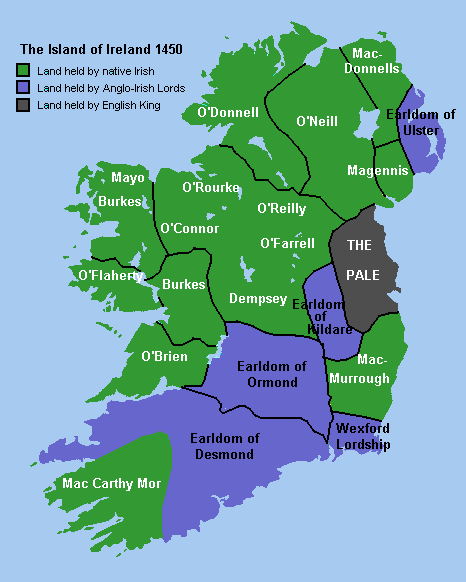


 Shite'n'Onions